
Geneva, 30 September 2025 — The International Consortium on Combating Wildlife Crime (ICCWC) has released its latest Annual Report 2024 offering a comprehensive overview of the Consortium’s efforts and impact over the past year. Published annually, the report highlights key achievements of countries around the world to combat wildlife crime, including key collaborative milestones, 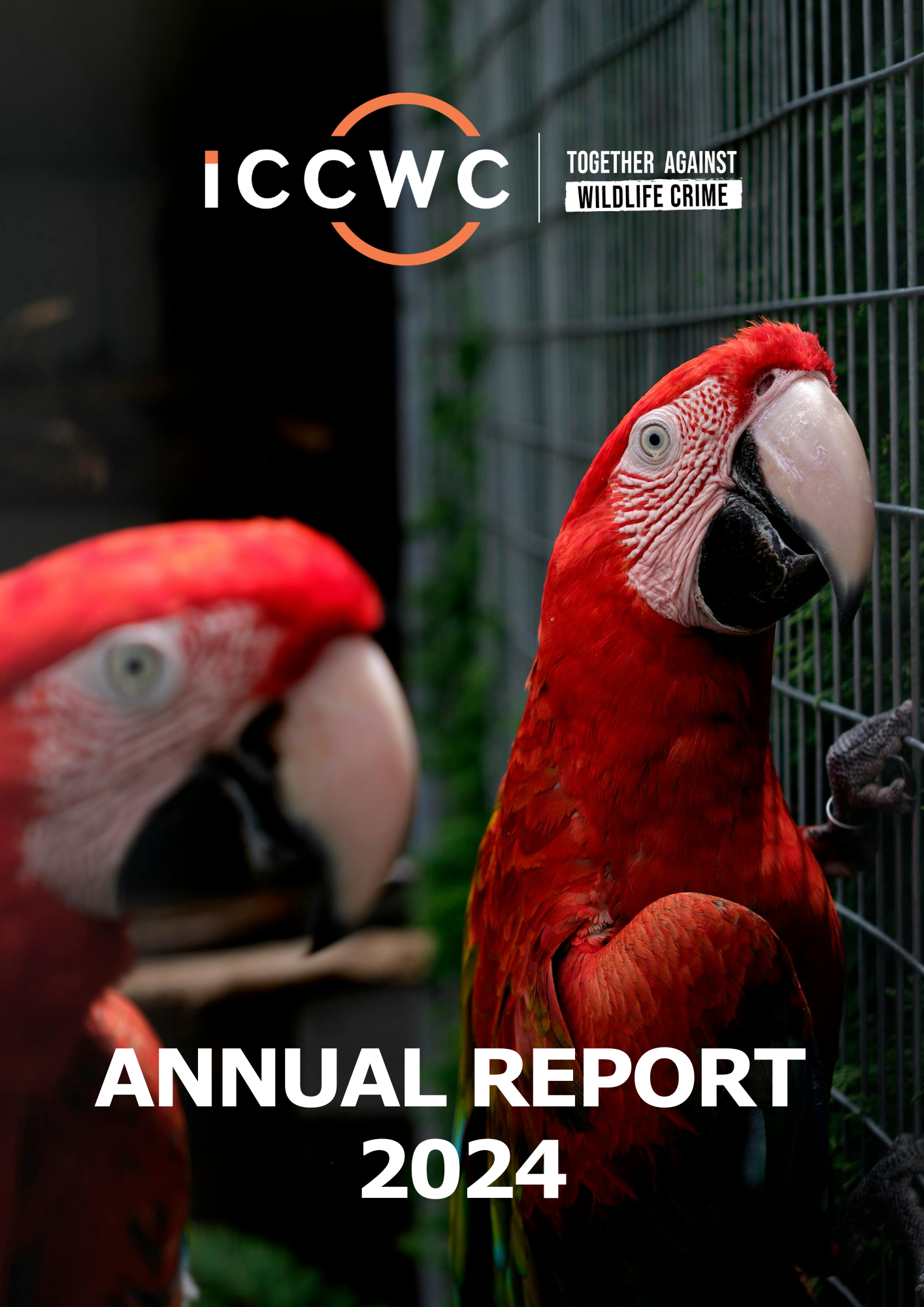 and progress made in strengthening criminal justice responses to wildlife crime.
Secretary-General of the Convention on International Trade in Endangered Species of Wild Fauna and Flora (CITES) Ivonne Higuero emphasized the urgency of this work:
“Year on year, wildlife crime remains a global threat that fuels the triple planetary crisis, harming ecosystems, biodiversity, wildlife and people. In 2024, ICCWC proudly supported 124 CITES Parties worldwide in strengthening their criminal justice responses to wildlife crime. On behalf of ICCWC, we proudly recognize Parties’ continued efforts in pursuit of a world free of wildlife crime.”
Highlights from the 2024 Report
Through targeted, evidence-based approaches, ICCWC works with countries to strengthen criminal justice systems and deliver coordinated support to combat wildlife crime. This includes technical assistance, intelligence-led global operations, capacity building, financial investigations training, anticorruption risk assessments and the use of forensic science to bring offenders to justice.
Focus stories showcase some of this work across the criminal justice system.
Strengthening international cooperation to combat timber trafficking
To address the illegal trade in CITES-listed tree species, specialized training to officers from 12 African countries, including Burundi, Cameroon, the Democratic Republic of the Congo, Gabonese Republic, Kenya, Madagascar, Malawi, Mozambique, South Sudan, United Republic of Tanzania, Uganda and Zambia. Participants gained both theoretical and practical skills to disrupt timber trafficking networks across Central, Eastern and Southern Africa.
Disrupting transnational wildlife trafficking networks
A network operating between Madagascar, Thailand, and beyond was dismantled. In 2024, Malagasy Customs intercepted couriers smuggling tortoises, while Thai authorities seized over 1,200 endangered animals, including lemurs and radiated tortoises. ICCWC coordinated intelligence sharing and legal cooperation, enabling the repatriation of the animals with the support of Airlink and Qatar Airways. The rescued animals were rehabilitated in Madagascar for future release, underscoring the power of international collaboration.
Building strong cases: ICCWC Global Conference
In April 2024, ICCWC hosted the international conference, Building Strong Cases through Operation Thunder: From Seizure to Prosecution in Belgium. Nearly 80 experts from 24 countries, spanning customs, police and judiciary, explored the complexities of prosecuting wildlife crime. The event fostered stronger inter-agency and cross-regional collaboration while also engaging the private sector to support enforcement efforts.
Wildlife Inter-Regional Enforcement Forum (WIRE)
Since 2016, the WIRE Forum has enhanced global law enforcement collaboration against wildlife crime. In 2024, it continued to foster informal networks, working groups and restricted-access government meetings. The 8th WIRE Forum held in South Africa in 2024 showcased results from the recent Operation SAMA (Saving African Wildlife through Multilateral Assistance) which resulted in the seizure of 106 endangered species products across 19 countries, along with multiple arrests and prosecutions. The 8th WIRE Forum brought together 140 officials from 36 countries to strengthen cooperation against transnational wildlife crime. This included a dedicated meeting of the Trilateral Enforcement Contact Group subgroup on enforcement which was established to address totoaba trafficking.
Toolkit and Indicator Framework: Turning assessments into action
In 2024, 17 countries received ICCWC support to act on recommendations from the ICCWC Wildlife and Forest Crime Analytic Toolkit and the Indicator Framework for Combating Wildlife and Forest Crime. These tools help governments establish baselines, measure progress, and develop tailored national strategies in the fight against wildlife crime. Moving forward, ICCWC will place greater emphasis on implementing and monitoring these recommendations.
International cooperation
A wide range of other ICCWC initiatives include strengthening Wildlife Enforcement Networks, advancing wildlife forensic science, tackling wildlife crime linked to the Internet, synergies with other initiatives such as the World Bank’s Global Wildlife Program, and building capacity to combat trafficking in marine species and illegal timber. ICCWC also supported the 8th iteration of Operation Thunder, which resulted in over 20,000 live animals seized and 36 suspects arrests in the largest-ever wildlife and forestry operation.
What’s next for ICCWC?
Under the ICCWC Vision 2030 and the Strategic Action Plan 2023–2026, the Consortium will continue to support countries through national, regional, and global initiatives. Priorities include joint investigations, mentorship programmes, and enhanced international cooperation to ensure criminal justice systems worldwide work together to bring wildlife crime offenders to justice.
Throughout 2024 ICCWC mobilized approximately USD 3.5 million to support countries to combat wildlife crime. ICCWC’s work is made possible through the generous support of the European Union, Monaco, the United Kingdom of Great Britian and Northern Ireland and the United States of America.
Notes to Editor
About ICCWC:
ICCWC - The International Consortium on Combating Wildlife Crime
Established in 2010, ICCWC is a unique partnership of five intergovernmental organizations – The Secretariat of the Convention on International Trade in Endangered Species of Wild Fauna and Flora (CITES), the International Criminal Police Organization (INTERPOL), the United Nations Office on Drugs and Crime (UNODC), the World Bank (WB) and the World Customs Organization (WCO).
Through technical assistance, tools, training, and operational support, ICCWC works along the entire criminal justice chain, building the capacity of frontline law enforcement in countries and regions around the world affected by wildlife crime.
Find out more:


